Course Overview

Learn Piping Material Selection, Routing, Layout, Supports, Flexibility, Isometrics, MTO, Plot Plans, and Tie-ins

This course focuses on the engineering and design of piping systems, from conceptual layout through detailed design and fabrication deliverables.

Participants learn how to transform process information into constructable piping designs, including piping material selection, routing, supports, flexibility, isometrics, Layout, Tie-ins and MTO preparation.
The program blends engineering theory with practical field knowledge to ensure designs are safe, compliant, and construction ready.
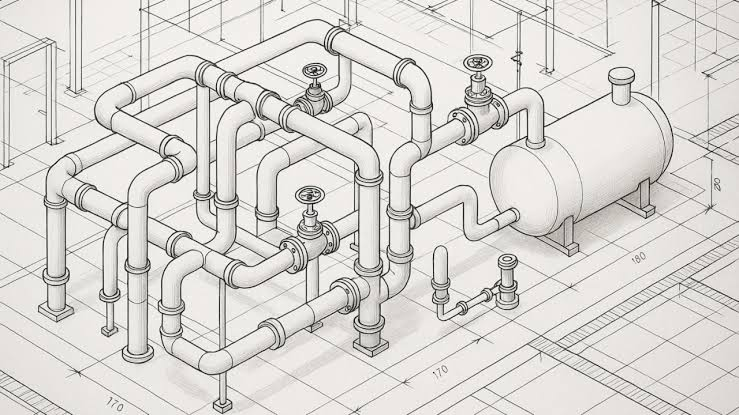
What You Will Gain

  • Participants develop practical expertise in:
  • Piping material selection in accordance with ASME, ASTM, API, and NACE standards
  • Line class development and piping specification compliance
  • Piping routing strategy, layout optimization, and plot plan coordination
  • Pipe support design, flexibility analysis considerations, and constructability review
  • Isometric extraction and 3D model validation (Plant 3D, PDMS, E3D)
  • Accurate Material Take-Off (MTO) preparation and quantity verification
  • Brownfield tie-in planning and shutdown execution strategy
  • QA/QC integration within engineering deliverables and design documentation
  •  

Target Audience

This course is designed for professionals involved in piping engineering and plant design, including:

  • Piping Engineers and Designers
  • Mechanical Engineers working with process piping systems
  • Field Engineers seeking deeper design understanding
  • QA/QC Engineers reviewing piping deliverables
  • EPC Project Engineers overseeing design development

It is particularly valuable for professionals working in oil & gas, petrochemical, power, biogas, pulp & paper, and industrial facilities.

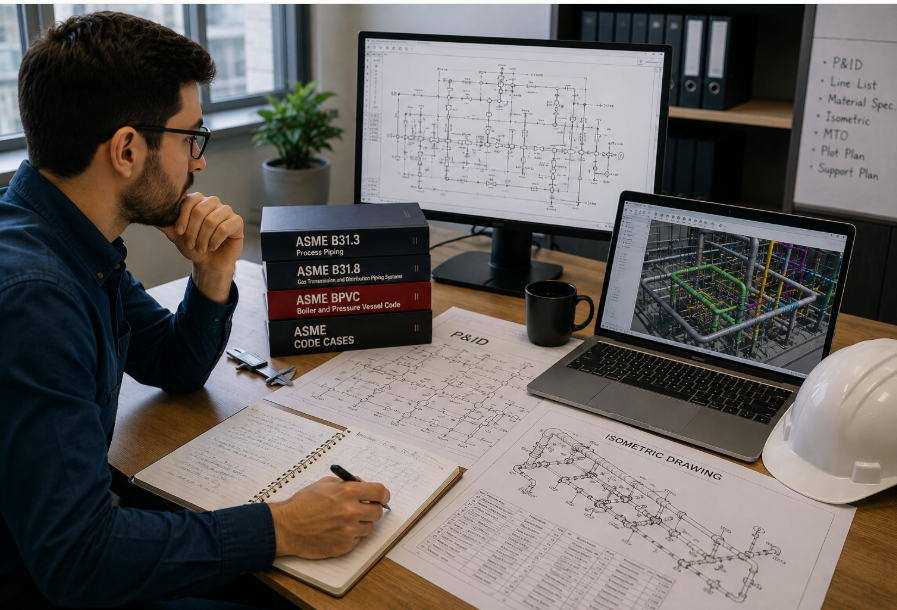
Prerequisites

  • Basic understanding of piping systems and mechanical engineering principles

  • Familiarity with P&IDs and industrial drawings

  • Knowledge of ASME B31.3 / B31.8 and related codes (recommended)

  • Experience with CAD or 3D modeling tools (helpful but not mandatory)

Why Learn From This Trainer

Senior-Level Piping Design & EPC Execution Expertise

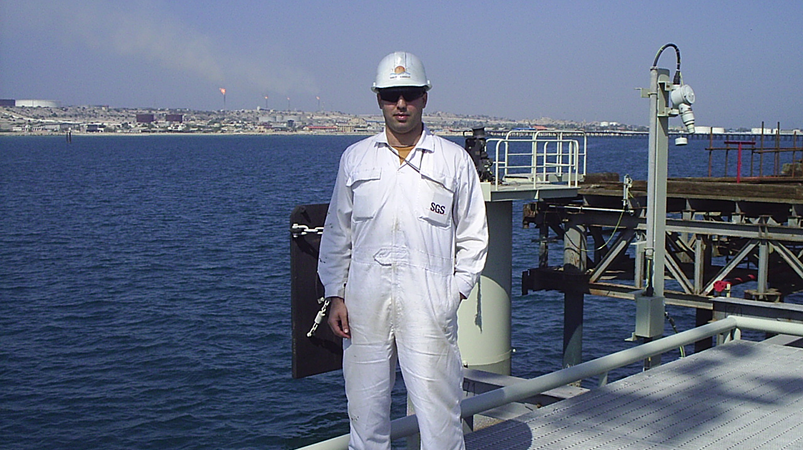
This course is delivered by a senior piping design engineer with hands-on experience in conceptual, basic, and detailed engineering for large-scale EPC projects in oil & gas and industrial facilities.

The training reflects real engineering office workflows and field integration challenges — not theoretical drafting exercises.

End-to-End Engineering Perspective

The trainer’s experience spans the full piping lifecycle:

  • Conceptual design and FEED support

  • Detailed engineering and fabrication deliverables

  • Field constructability and installation interface

  • Design-to-construction coordination

  • Documentation for inspection, turnover, and client approval

This combination of technical expertise, field insights, and QA/QC awareness ensures participants complete the course with a senior-level piping design mindset, capable of producing designs that are safe, code-compliant, constructable, and cost-effective.
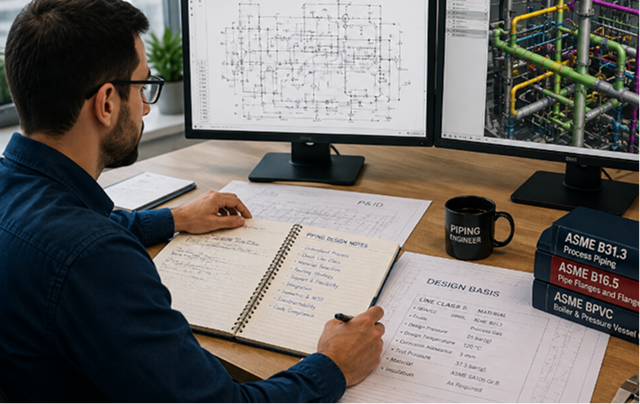
Course Modules and Detailed Syllabus

Module 1: Piping Design
Fundamentals

Learning Objectives:

  • Understand the role of a piping designer in EPC projects


  • Learn how to interpret P&IDs, line classes, and process requirements


  • Integrate design requirements into layouts, isometrics, and MTO

Topics Covered:

  • Piping design workflow from conceptual to detailed engineering

  • P&ID interpretation and line numbering systems

  • Material class selection based on fluid type, pressure, temperature, and corrosion considerations

  • Introduction to line lists, material specifications, and piping codes

  • Integration of piping with process, mechanical, structural, and civil disciplines

Practical Exercises:

  • Identify line classes on P&ID

  • Generate preliminary line list for selected process unit

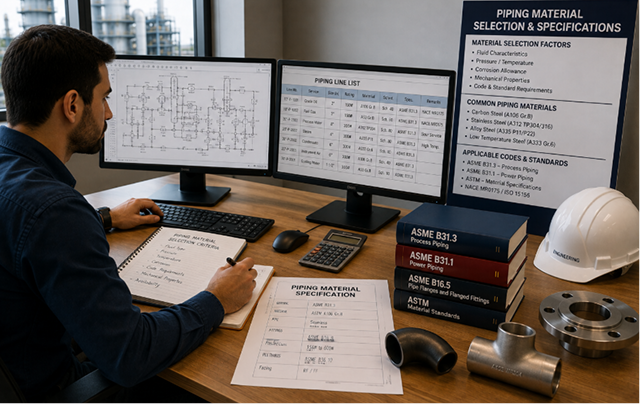
Module 2:Piping Material Selection & Specifications

Learning Objectives:

  • Select appropriate piping materials for each service and code requirement

  • Prepare complete Piping Material Specifications (PMS)

  • Understand code compliance and substitution strategies

Topics Covered:

  • ASME, ASTM, NACE, API, CSA material standards

  • Carbon steel, stainless steel, low-alloy steel, clad, Inconel, titanium, and specialty alloys

  • Temperature, pressure, and corrosion considerations

  • MOC (Material of Construction) and material class determination

  • PMS documentation, MTO linkage, and vendor communication

Practical Exercises:

  • Prepare PMS sheets for various pipelines and mechanical systems

  • Identify material substitutions without compromising compliance

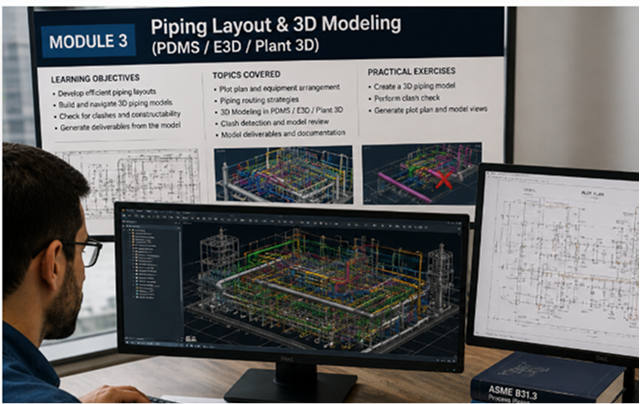
Module 3: Piping Layout & Plot Plan Development

Learning Objectives:

  • Optimize piping routes for constructability, operability, and maintenance

  • Understand plot plan integration with equipment, supports, and structures

  • Identify routing conflicts and interface challenges

Topics Covered:

  • Piping routing strategies for greenfield and brownfield projects

  • Plot plan development: clearances, spacing, access, and safety requirements

  • Integration with mechanical equipment, supports, and instruments

  • 3D design model utilization (PDMS, E3D, Plant 3D) for layout verification

  • Clash detection and resolution using NavisWorks or 3D review platforms

Practical Exercises:

  • Develop a sample plot plan including process equipment, pipe routing, and supports

  • Identify and resolve potential routing conflicts

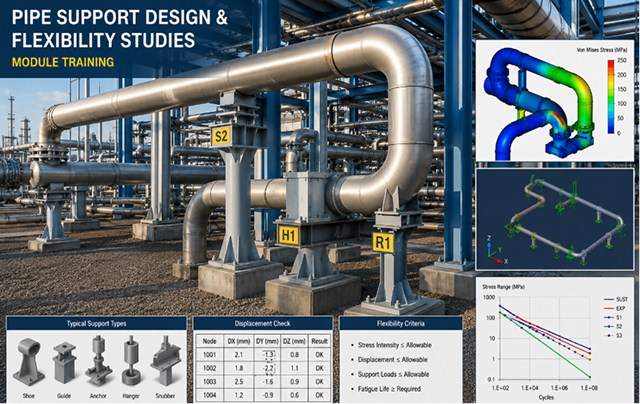
Module 4: Pipe Support Design & Flexibility Studies

Learning Objectives:

  • Design and select appropriate pipe supports and hangers

  • Perform flexibility and stress analysis for thermal expansion, vibration, and weight load

  • Optimize support spacing for cost-efficiency and safety

Topics Covered:

  • Pipe support types: clamps, guides, anchors, springs, and rollers

  • Load calculation, thermal expansion, and flexibility considerations

  • Integration of supports into piping isometrics and 3D models

  • Constructability and maintenance access review

Practical Exercises:

  • Design pipe support layout for a selected piping system

  • Verify stress compliance and flexibility using sample calculations

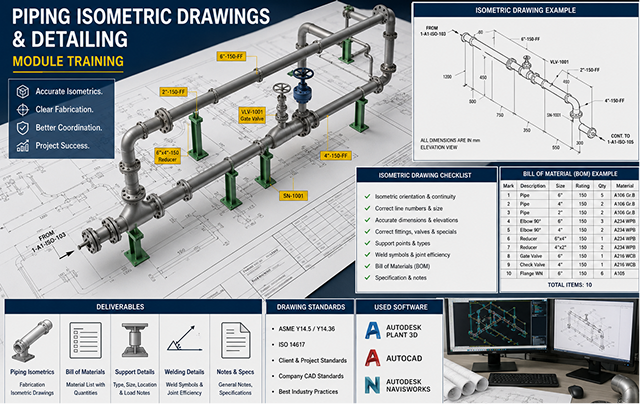
Module 5: Piping Isometric Drawings & Detailing

Learning Objectives:

  • Convert layouts and P&IDs into detailed isometric drawings for fabrication

  • Generate weld maps, dimensions, and fabrication notes

  • Integrate supports, tie-ins, and special components

Topics Covered:

  • 3D model extraction of piping isometrics

  • Isometric annotation: dimensions, weld symbols, flange types, special fittings

  • Integration of supports, anchors, guides, and flexibility elements

  • QC checks and cross-referencing with line lists, MTO, and PMS

  • Preparing isometrics for fabrication, inspection, and construction

Practical Exercises:

  • Create a detailed piping isometric for a sample process line

  • Annotate weld maps and support placement

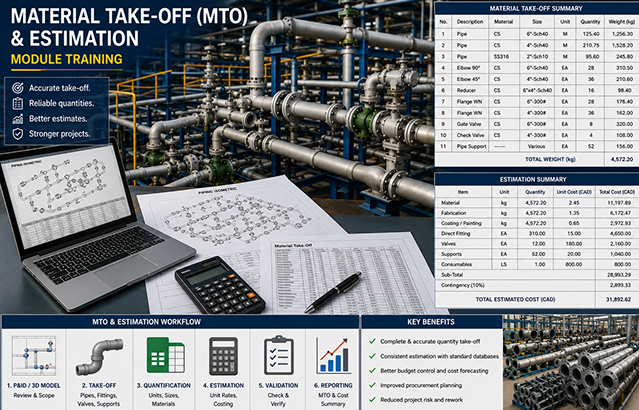
Material Take-Off (MTO) & Estimation

Learning Objectives:

  • Prepare accurate material take-offs for pipes, fittings, valves, and supports

  • Estimate cost and quantity for procurement and construction planning

  • Link line lists, plot plans, and isometrics to MTO

Topics Covered:

  • Pipe diameter, wall thickness, and length calculation

  • Fitting and flange quantity estimation

  • Valve and specialty item take-off

  • Cost estimation and procurement linkage

  • Tie-in and spool material planning

Practical Exercises:

  • Generate MTO for a 3D piping model

  • Estimate project cost and identify critical long-lead items

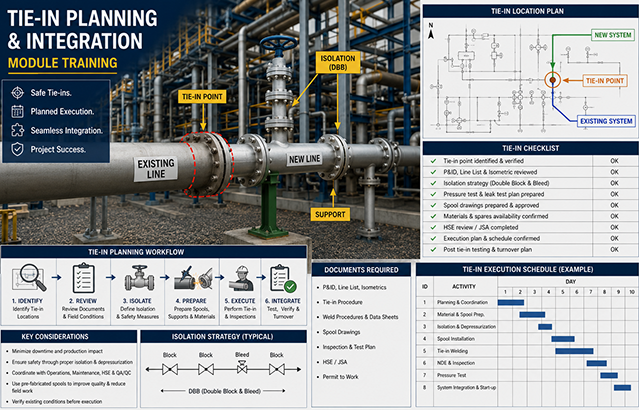
Module 7: Tie-in Planning & Integration

Learning Objectives:

  • Plan tie-ins with existing systems efficiently

  • Evaluate risks, sequencing, and accessibility during construction

  • Coordinate with field engineers, contractors, and QA/QC teams

Topics Covered:

  • Tie-in design considerations: alignment, welding, and thermal expansion

  • Brownfield modification strategies

  • Impact on material estimation and schedule

  • Collaboration with construction and pre-commissioning teams

Practical Exercises:

  • Plan a tie-in for an existing plant section

  • Verify design integration with plot plan and isometrics

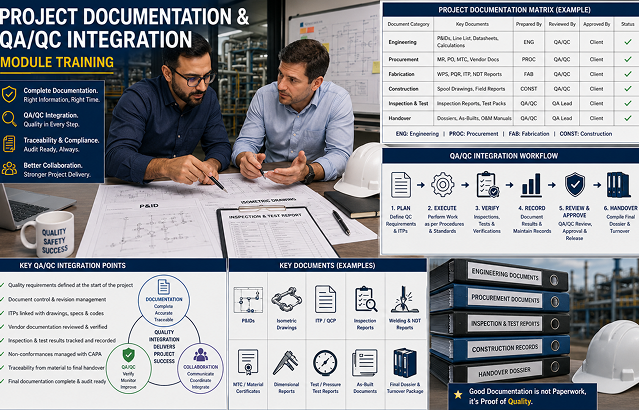
Module 8: Project Documentation & QA/QC Integration

Learning Objectives:

  • Prepare and integrate all project deliverables for handover

  • Ensure compliance with codes, client standards, and QA/QC requirements

Topics Covered:

  • Compilation of P&IDs, plot plans, isometrics, line lists, PMS, and MTO

  • QC documentation: inspection checklists, weld maps, and fabrication notes

  • Vendor communication, deviations, and approval workflow

  • Turnover packages for construction, commissioning, and client submission

Practical Exercises:

  • Create a complete piping design package for a sample project

  • Perform internal QA/QC check and review

Course Outcomes

By the end of this course, participants will be able to:

Design piping systems from P&ID to isometric fabrication drawings

Select appropriate materials, supports, and flexible routing strategies

Develop MTO, line lists, and plot plans for EPC projects

Plan tie-ins efficiently and coordinate with multidisciplinary teams

Integrate QA/QC best practices into piping design and documentation

Deliver complete, compliant, and cost-effective piping design packages

Standards & Codes Covered

  • ASME B31.3/B31.8 – Process & Utility Piping

  • ASME VIII – Pressure Vessels

  • API 650 / 620 – Storage Tanks

  • ISO 9001 – Quality Management

  • ASTM, NACE, BS, CSA – Material & Coating Requirements